- Doomsday Scenario
- Posts
- Accountability for ICE and CBP
Accountability for ICE and CBP
However bad you think the corruption and misconduct at ICE and CBP is — the reality is far far worse.

Garrett Graff
February 01, 2026 • Reading Time: 20 minutes
Welcome to my regular column on national security, geopolitics, history, and—unfortunately—the fight for democracy in the Trump era. I hope if you’re coming to this online, you’ll consider subscribing right here. It’s easy—and free:
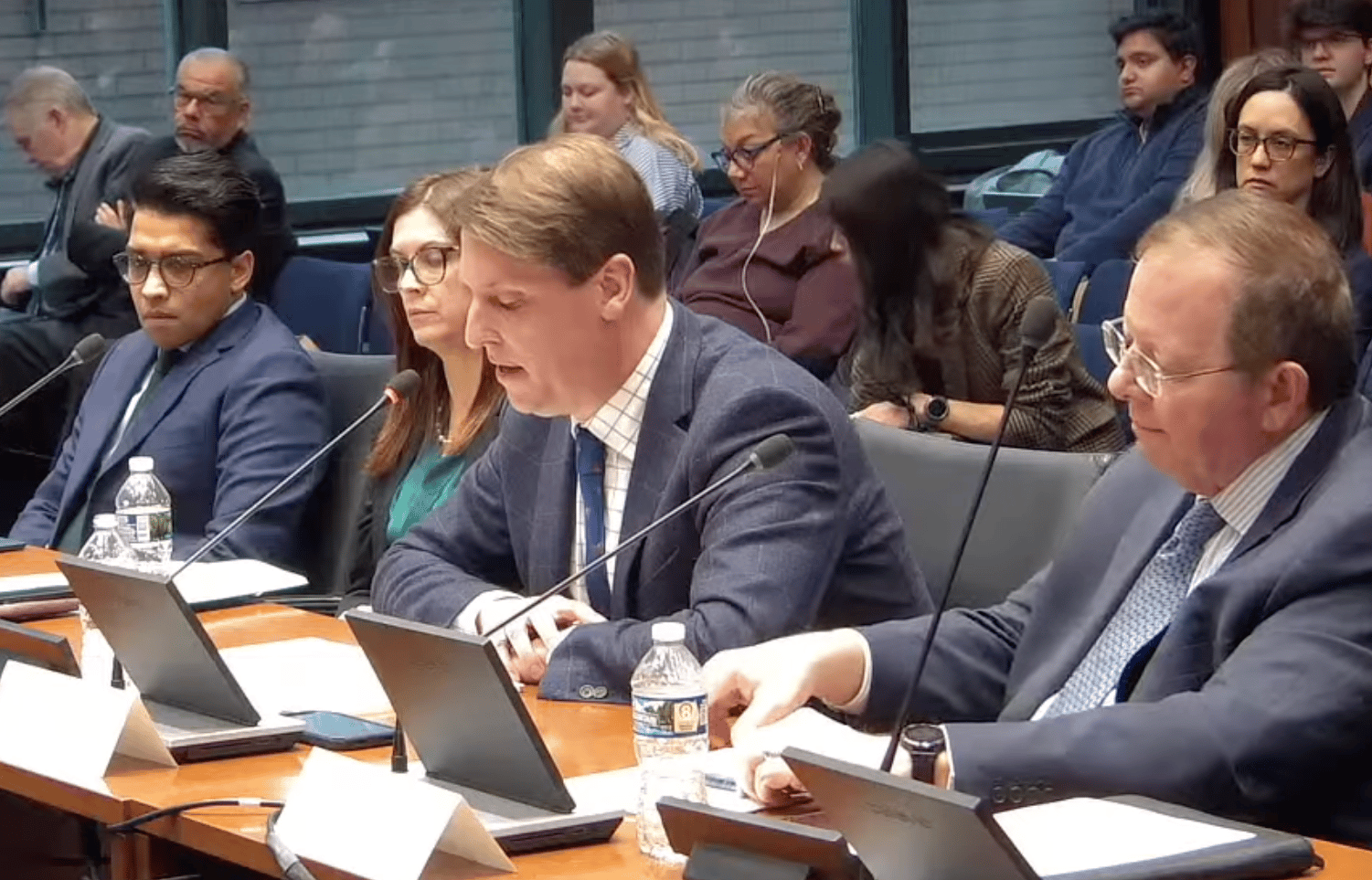
On Friday, I testified in front of Governor J.B. Pritzker’s “Illinois Accountability Commission,” the state government body he set up after the Trump administration’s “Operation Midway Blitz” attack on Chicago last summer and the precursor of the even larger federal occupation of Minneapolis that we’re experiencing now. The body’s goal is to both document what happened to Chicago, with an eye on future prosecutions, understand the role of various Trump officials in this federal occupation, and offer recommendations about how to fix immigration enforcement going forward.
I was called as the commission’s expert witness on the history of problems, corruption, and training within CBP and ICE — a story I’ve covered for more than a dozen years, as regular readers of this newsletter know. To prepare, I spent the last week re-reading and re-familiarizing myself with DHS scandals and waves of corruption and mismanagement — and found myself horrified anew.
It was the first time I’ve ever sat down and tried to organize and explain all of the last twenty-five years of DHS and immigration enforcement since 9/11 and painted a complete picture of what’s gone wrong with ICE and CBP. Overall, the totality of the criminality inside CBP in particular is so much worse than I even realized.
As I told the commission, “US law enforcement has never experienced a scandal as big, as far-reaching, destructive, and as far-lasting as the wave of corruption and criminality that has overtaken CBP and the Border Patrol since 2005. It’s a story that too much of the public still doesn’t know and too many policymakers still don’t understand.”
I also totaled up some new numbers to get at the scale of the problem:
Criminality is so rampant inside CBP that it has seen one of its own agents or officers arrested every 24 to 36 hours since 2005. CBP’s misconduct scandal is so long-running that today it would be old enough to drink.
In total, according to CBP’s own discipline reports, over the 20 years from 2005 to 2024 — the last year numbers are available — at least 4,913 CBP officers and Border Patrol agents have been arrested themselves, some multiple times. (In 2018 alone, a single CBP employee was arrested five times.) To put that number in perspective:
• The population of CBP agents and officers who have been arrested would make it roughly the nation’s fourth largest police department — equal to the size of the entire Philadelphia police.
• Indeed, for much of the 2010s and likely before and since, it appears the crime rate of CBP agents and offices was higher PER CAPITA than the crime rate of undocumented immigrants in the United States.
The experience of sitting through the hearing was searing itself; a University of Chicago professor who specialized in political violence discussed how the administration is using violence and language to legitimize itself and de-legitimize the opposition. “The conditions that historically precede tragedy are now present—even if no one intends tragedy to occur,” Dr. Robert Pape said. He talked extensively about how in a democracy the state’s monopoly on violence is only seen as legitimate if citizens understand it’s being used to protect them and not oppress them. Right now, we’re watching the inverse occur with CBP and ICE.
Dr. Pape talked too about how much we should be troubled that DHS and the White House have reframed immigration enforcement as a moral struggle and not what it’s supposed to be — administrative law. We are being told we are in a war for the soul of our country. I think that’s true, unfortunately, but that what we’re seeing is that the American people have joined that battle on the right side against these government forces.
The witness after me, Deborah Fleischaker, was a longtime DHS and ICE official, including a stint as ICE’s acting chief of staff, and she discussed in solemn terms how the processes she’d watched ICE and DHS carefully develop — “rule-bound, deliberate, and constrained by internal guidelines” — have been thrown out the window. “The enforcement we’ve seen is not necessary or effective,” she said. And a later witness, who taught use-of-force to recruits at the federal law enforcement training academy, explained how much of what we’ve seen on the streets of the US by ICE and CBP violates any normal standards about use-of-force.
The entire three-and-a-half-hour hearing was one reminder after another about how dangerous the Trump administration’s occupation and ongoing assault against American cities is for our country — and, particularly, the most basic foundations of a free society, democracy, and federalist system where free speech and protesting the government is explicitly protected by the First Amendment.
You can watch my full testimony on YouTube here, and the text of testimony follows below. I also prepared an exhaustive 50-page “Statement for the Record” that draws on much deeper specific detail about each of the problems I mention in my verbal testimony. Some of it will be familiar to regular readers of this newsletter; other parts are new. (If you are in any way specifically interested in ICE and CBP or professionally following this, I strongly encourage you to at least scan through the full document — however bad you think it is, the reality is far far worse. In particular, the full statement allowed me to explore more deeply two emerging problems — ICE’s reliance on surveillance technology and the looming crisis of its concentration camp-style detention facilities.)
I want to stress my conclusion: “We as a nation must act to change the trajectory of immigration enforcement in our country. America cannot survive as a free society if ICE and CBP continue to operate as they have over the last year — let alone as both agencies are turbocharged and empowered with even more funding, more officers, more guns, and more arrests.”
I don’t usually ask you as readers to take any action, but I hope you will take the time to read or watch this testimony and — please — if reading it troubles you as much as writing it troubled me, forward this or send it to a friend, colleague, or even an elected official.
Congress is debating right now what, if any, changes it will attempt to force on the way that ICE and CBP operate — these next two weeks are one of the biggest opportunities we have as a nation to change what we see happening in our country. Not enough Americans know this story and the very troubling history of ICE and CBP that predates January 20th of last year..
GMG
From the Border to the Mainland: The Transformation of
America’s Immigration Apparatus into a Paramilitary Force
Illinois Accountability Commission Testimony — Friday, January 30, 2026
By Garrett M. Graff
Good morning; my name is Garrett Graff and I’m honored to be here to speak about the historical challenges and problems with the Department of Homeland Security and two of its largest components, CBP — aka Customs and Border Protection, which includes the Border Patrol — and the Bureau of Immigration and Customs Enforcement, commonly known as ICE.
First, let me introduce myself. I’m a journalist and historian; I’ve written multiple books focused on federal law enforcement, national security, and American government — one of which, about Watergate, was a finalist for the Pulitzer Prize in History — and published dozens of articles in places like POLITICO, the New York Times, the Washington Post, and The Atlantic about DHS, the Justice Department, and federal law enforcement, including the FBI, CBP, and ICE.
My testimony today is based on, draws upon, and in places quotes from that extensive previous reporting and writing over the years and is informed by literally hundreds of conversations with agents and executives at all levels of federal law enforcement, including dozens or scores of interviews with agents and officers of ICE and CBP. I’ve interviewed CBP commissioners and ICE directors in their executive suites; I’ve been on patrol with Border Patrol, ridden on their boats and flown in their helicopters, shared meals with the union officials and been in the studio while they recorded their popular podcast, and observed as Border Patrol apprehended migrants crossing the Texas-Mexico border.
My goal today is to outline for the Commission some of the history of ICE and CBP and, in particular, to outline what has changed — and what is changing — as the Trump administration floods both agencies with money from the so-called “One Big Beautiful Bill.”
What I hope you will take away from my testimony today is that the problems, abuses, scandals, and controversies involving CBP and ICE that have been on display over the last year in far too many American cities and social media feeds — from deadly shootings and agent brutality to the routine abuse of Constitutional and civil rights and liberties — is entirely consistent with long-identified problems in CBP and ICE that have gone ignored and uncorrected both by a generation of Congress and multiple Democratic and Republican administrations alike.
These are not aberrations — these incidents are the entirely foreseeable consequence of specific funding and management decisions and how the nation has approached immigration enforcement since 9/11 and the creation of the Department of Homeland Security.
In particular, CBP has been likely the deadliest and certainly the most troubled federal law enforcement agency for the better part of two decades now. Since 9/11, the culture of ICE and CBP has meant that the agencies have been what you might call a fascist-secret-police-in-waiting, troubled agencies simply waiting for an ambitious would-be authoritarian.
ICE is an agency whose recruiting and training standards are so low that other federal law enforcement agents say pejoratively that ICE is “hired by the pound, from the pound.” And the paramilitary CBP, especially, has been uniquely callous with human life and suffers from a deeply ingrained culture of racism and misogyny, all of which is enabled by an all-but unequaled longstanding sense of impunity.
CBP — the nation’s largest law enforcement agency — has been plagued for two decades by a tidal wave of crime, corruption, and misconduct driven by a disastrous post-9/11 hiring surge that flooded the force with thousands of agents and officers who never should have been given a badge and a gun — including, as one CBP commissioner told me, even accidentally hiring members of actual drug cartels.
Criminality is so rampant inside CBP that it has seen one of its own agents or officers arrested every 24 to 36 hours since 2005. CBP’s misconduct scandal is so long-running that today it would be old enough to drink.
In total, according to CBP’s own discipline reports, over the 20 years from 2005 to 2024 — the last year numbers are available — at least 4,913 CBP officers and Border Patrol agents have been arrested themselves, some multiple times. (In 2018 alone, a single CBP employee was arrested five times.) To put that number in perspective:
The population of CBP agents and officers who have been arrested would make it roughly the nation’s fourth largest police department — equal to the size of the entire Philadelphia police.
Indeed, for much of the 2010s and likely before and since, it appears the crime rate of CBP agents and offices was higher PER CAPITA than the crime rate of undocumented immigrants in the United States.
Before I dive in, I want to add an over-arching caveat. None of what I’m about to say is meant to imply that everything was hunky-dory in DHS at noon on January 20th last year when Donald Trump returned to the presidency. Quite the opposite.
And yet something was fundamentally different before last year: ICE and CBP managed to go about their work in such a way that didn’t cause ordinary law-abiding US citizens to fear for their lives; ICE or CBP agents didn’t routinely operate wearing masks and deploy teargas daily against US citizens; the entire school systems of major US cities didn’t have to close in fear of CBP and ICE operations targeting neighborhoods, and professional sports leagues like the NBA didn’t have to cancel games because of ICE and CBP violence in major American cities.
Something big has changed — and my hope is that this testimony will help explain what and how.
Part I: The History
First, how history plagues CBP and ICE. On September 11, 2001, immigration was the purview of the Justice Department’s Immigration and Naturalization Service while border trade and travel was the responsibility of the Treasury Department’s US Customs Service.
In the wake of the 9/11 attacks and as part of the creation of DHS and the massive reshuffling of government, both INS and Customs were broken apart. ICE brought together the “legacy INS” deportation and detention officers, which were renamed as what’s now known as Enforcement and Removal Operations (ERO), as well as the “legacy INS” and “legacy Customs” special agents to form the Homeland Security Investigations division, HSI.
Other parts of INS and Customs were reshuffled into the new, supposedly “unified” border agency of Customs and Border Protection (CBP). The green-uniformed Border Patrol were in charge of patrolling the border in between legal ports of entry while a team made up of “legacy Customs inspectors” and USDA agriculture inspectors were combined and renamed into the blue-uniformed Office of Field Operations to handle legitimate trade and travel through “ports of entry” like land crossings, seaports, and airports.
Problem #1: A Hiring Surge Gone Wrong
One of the first things Congress did with the new agency was to super-charge its hiring. The agency’s own studies concluded the Border Patrol did not have “operational control” over 97 percent of the border.
Altogether, the border was so porous that in 2000, a three-ton American elephant named Benny appeared in a Mexico City circus, only for US authorities to discover there was no record he’d ever crossed the border.
The plan to remedy this lack of control of the border was audacious — and remarkably ill-conceived: During the eight years of the Bush administration, the Border Patrol surged from 9,200 agents in 2001 to some 18,000 agents — and eventually peaked in the Obama administration at 21,000 agents. Add in the officers of the Office of Field Operations and the air and marine officers, and CBP had a gun-carrying workforce of about 45,000 agents and officers.
There was plenty of evidence even before the hiring surge to believe it was a bad idea. Police departments in Miami, Los Angeles and Washington, D.C., had all been beset by systemic misconduct scandals after they had tried to grow their force rapidly in the 1980s and ’90s.
The Border Patrol hiring surge would be no different.
The surge meant the agency had to search far and wide for increasingly less qualified candidates. The agency raised its recruiting age limit from 37 to 40, and regularly sent new agents through the academy and even out into the field before completing full background checks. Agents in the field pejoratively referred to the new hires as “No Trainee Left Behind.” By the end of the Bush administration, more than half of the Border Patrol had been in the field for less than two years.
This hiring surge collided with two other fundamental and foundational problems with CBP — its legal authorities and its culture.
Problem #2: Limited Legal Authorities
Understanding both ICE and CBP requires starting with the difference between two US government “job codes,” known as “1811s” vs. “1801s.”
So-called “GS-1801s” are the federal government’s street cops — the bottom ranks of law enforcement. The positions come with less training and lower education requirements — usually only a high school degree or equivalent — as well as more limited authority.
All of CBP, including both the Border Patrol and Office of Field Operation, are “1801s,” as are all ICE ERO deportation officers. All of them have strictly limited arrest powers.
Then there are the “GS-1811” positions, known as “Special Agent / Criminal Investigator.” These are the government’s detectives — think the FBI, Secret Service, US Marshals, and, notably, ICE HSI agents. These positions usually require more work experience and a college degree, and come with far more training (months, not weeks), and more broad investigative authority.
The difference between 1801s and 1811s may seem minor, but it’s incredibly important in understanding why CBP and ICE are as rogue and poorly trained as they are.
For one thing, that subtle difference in job code meant that CBP was entirely set up as 1801s, which inadvertently meant that it had no authority or power to investigate wrongdoing by its own agents and workforce — to make that point more sharply, in the post-9/11 reorganization, we created the nation’s largest law enforcement agency and didn’t give it the power to have the internal affairs capacity that one would expect at even a mid-size local police department.
It was a key ingredient in a recipe for disaster — one that would not be fixed until the final months of the Obama administration, more than a decade after the creation of DHS.
Which brings me to the third fundamental challenge and problem with CBP and, especially, the Border Patrol — its fiercely independent and closed-rank culture and tradition, borne of policing and protecting a largely unpopulated, harsh, and isolated region along the US-Mexican border.
Problem #3: Tradition and Culture
The Border Patrol’s culturally and traditionally something akin to what I’ve described as “part police force, part occupying army, [and] part frontier cavalry.” The traditional job of Border Patrol agents has been hard — they often work alone or in pairs in rural, rugged terrain, with backup and help often miles and sometimes even an hour or more away. Agents developed a strong tradition of frontier-style justice; its agency motto, “Honor first,” is as much a statement of machismo as it is about integrity.
This fierce independence manifests itself in distinct areas worthy of note, which combine to make it particularly susceptible for a would-be authoritarian — its approach to its daily work and use-of-force; a deep-seated institutional culture of racism and misogyny; and a pugilistic approach to politics.
Use of Force
This is an agency that is uniquely callous about human lives — both of US citizens and migrants.
It is, as best as anyone can determine, perhaps the nation’s deadliest law enforcement agency. It is notoriously hard to understand federal law enforcement shootings, but since 2010, CBP agents have been involved in at least 72 deadly shootings or use of force incidents.
An internal report in 2013 that the agency tried to keep secret accused its agents of shooting their weapons not out of fear but instead out of “frustration.”
In 2013, a report by the Police Executive Research Forum examined 67 incidents and found that “too many cases do not appear to meet the test of objective reasonableness with regard to the use of deadly force.”
Agents are emboldened in their use-of-force by a sense that there will never be consequences for doing so. Roughly 96 or 97 percent of complaints against Border Patrol historically have gone nowhere. In fact, across a four-year period from 2012-2015 that included 2,178 complaints that warranted investigation, just eleven resulted in an agent’s temporary suspension and eleven more resulted in a reprimand. Only one — one of 2,178 complaints! — led to an agent’s resignation. If you do that math, that works out to be that across the entire Border Patrol about three agents a year received a formal disciplinary reprimand. If agents act like they can get away with anything, the statistics back them up.
Racism and Misogyny
The racist and nativist roots of the Border Patrol are well known, as scholars like Kelly Lytle Hernandez traced in her book “Migra!”
But what is remarkable is how the seeping cultural corruption since 9/11 has taken an agency founded a century ago to enforce explicitly racist policies and managed to make it even more racist.
In 2017 CBP officers at Newark Airport set up a “rape table” at the New Jersey airport where they sexually assaulted and hazed other officers. One female CBP officer described the incident, saying, “I’m afraid for my life, my safety.”
In 2019, ProPublica uncovered a racist Facebook group made up of some 9,500 current and former Border Patrol agents and leadership—including the then-chief of the Border Patrol herself. As ProPublica wrote, “current and former Border Patrol agents mocked dead migrants, called congresswomen ‘scum buckets,’ and uploaded misogynistic images.”
This underlying racism, misogyny, and nativism has contributed to the third area of the Border Patrol’s culture I’d like to address — its unusually pugilistic participation in national politics. The Border Patrol union has particularly resisted transparency efforts and attempts to rein in use-of-force. When CBP announced it would recognize officers and agents who de-escalated confrontations and avoid using deadly force, the union called the new award “despicable.”
The union has also especially carved out a unique relationship with Donald Trump since the earliest days of his presidential campaign. It was the first union to endorse Trump — later followed by ICE’s union — and Donald Trump actually first wore his now signature “Make America Great Again” hat during a summer 2015 tour of the border initiated by local Border Patrol union officials.
The Entirely Predictable Result:
It wouldn’t surprise any seasoned law enforcement leader that doubling the size of CBP without adequate vetting, training, oversight, or management led to a host of problems — not the least of which was the stunning arrest statistics I cited earlier.
In 2016, in the final months of the Obama administration — a period that represented the peak of reform and professionalization efforts at CBP — an outside advisory group headed by NYPD Commissioner Bill Bratton concluded, “The CBP discipline system is broken.” Bratton’s advisory group noted that CBP’s discipline system was less rigorous, in fact, for its armed officers and agents than the Transportation Security Administration’s system for its unarmed airport screeners.
Hugely elevated misconduct, crime, and corruption problems continue to dog CBP to this day.
Overall, CBP’s arrest and misconduct rate is FIVE TIMES higher than other federal law enforcement agencies. CBP’s corruption problem was so bad that, according to what two CBP officials told me, DHS leadership under Janet Napolitano ordered CBP to change its definition of corruption to downplay to Congress the breadth of the problem.
US law enforcement has never experienced a scandal as big, as far-reaching, destructive, and as far-lasting as the wave of corruption and criminality that has overtaken CBP and the Border Patrol since 2005.
It’s a story that too much of the public still doesn’t know and too many policymakers still don’t understand.
Let me add one more caveat here: It’s not my goal here to paint all of CBP with a brush of misconduct, racism, and corruption. Many agents and officers are excellent — serving our nation in hard jobs in the best possible tradition. But as one female agent told Mother Jones in 2024, “I was a loyal agent and employee for 27 years and I see the good in the agency. But I can’t deny that the worst that I’ve seen has come at the hands of agents, and not the criminals we’re supposed to arrest.”
A Brief History of ICE
Now let me turn my attention for a moment to ICE. In the reshuffling of DHS, ICE got the job no one wanted — immigration enforcement domestically is arguably the country’s most fraught and unsettled policy area.
For most of its roughly 20 years of existence, ICE has faced a clear problem — there are way way way more undocumented immigrants in the United States than Congress funded ICE to find, arrest, and deport. For many years, ICE was budgeted for around 400,000 deportations.
ICE’s ERO side has long relied upon and focused heavily on what’s known as “prosecutorial discretion.” Under that strategy, ICE ERO mostly focused on deporting people with a so-called “final order of removal” — e.g., people who had exhausted all the legal process and ignored the binding decision of the immigration courts to leave the country — or people with criminal records above and beyond simply being undocumented — e.g., the much-talked murderers, drug smugglers, gang members, rapists, and the like who are always cited as the Trump administration’s main targets.
That meant — generally speaking, and again with the all caveats I listed above — that if you were an undocumented immigrant but weren’t on the government’s radar, you didn’t have to worry much in your day-to-day life.
The strategy of discretion worked. By 2011, nearly half of the 400,000 people deported by ICE had a criminal conviction, up from a third in 2008.
That work was manpower intensive, but it also meant that they were making a real difference in terms of crime in the United States. They were actually finding, arresting, and deporting the “worst of the worst,” while, for the most part, leaving the day-laborers and abuelas alone to await whatever political solution to America’s immigration crisis Congress could someday find.
Then Donald Trump was elected president and took office a second time last year.
Part II: What’s Changed
Today, that “prosecutorial discretion” is out the window. Last spring, Deputy White House Chief of Staff Stephen Miller set an arbitrary target of one million deportations a year — which translates into immigration officers making 3,000 arrests a day. That new quota meant ICE and CBP had to abandon any pretext of targeted enforcement operations; it took too long and required too many officers.
Those raids where Greg Bovino’s heavily-armed CBP agents storm into Home Depot parking lots are a necessity of this new quota because it’s the low-hanging fruit of immigration enforcement.
Similarly, ICE and CBP officers around the country — and particularly in targeted operations in places like Los Angeles, Chicago, or Minneapolis — are stopping, detaining, and deporting people with no criminal records who are following all legal procedures for their asylum, immigration, or citizenship proceedings. These actions aren’t because any of these immigrants pose a threat to the United States — it’s because they’re easy pickings and ICE and CBP have embraced “quantity” over “quality.” The terror and trauma of theses arrests is the point — not the safety of the United States.
That shift is reflected in how most people now detained by ICE have no criminal record. A CATO Institute roundup in November found that “nearly three in four (73 percent) had no criminal conviction” and just “5 percent had a violent criminal conviction.”
This is not how ICE has traditionally been used, and CBP wasn’t supposed to be routinely policing the streets and cities of America’s interior.
The Border Patrol and ICE are just not trained, prepared, or accustomed to patrolling “regular” America and rolling through neighborhoods, school grounds, parking lots. They’re not regular police, and they don’t know how to behave or navigate urban civilian environments. They don’t have the muscle memory or de-escalation skills of dealing with angry citizens or innocent people. It’s clear that many lack real-world policing skills.
The fact that they’re instead approaching their work not as law enforcement but as an occupation military force is clear in the language officials are using; yesterday alone, Greg Bovino gave an attaboy video calling for agents to “Turn and Burn” and Tom Homan referred to agents deploying to Minneapolis as being “in theater.” This is not the mentality we want guiding or inspiring a federal law enforcement agency.
Their poor training and sense of political impunity is contributing to and driving their “Arrest First and Question Later” approach, which is the exact opposite of what would you expect in a free and democratic society, and it has had entirely predictable outcomes. ProPublica found in October that more than 170 US citizens had been arrested by immigration authorities, some disappearing into ICE’s apparatus for days.
Sometimes I believe that American exceptionalism — the sense that “it can’t happen here” — blinds us to the realities of our current political life. The behavior of ICE and CBP over the last year is one such case. In any other foreign country, if a US reporter was writing about these raids and the occupation of Chicago last fall or Minneapolis right now, we wouldn’t hesitate to call ICE or CBP as a “paramilitary force loyal to the regime” or “masked right-wing militia” (and that, by the way, is exactly what other countries’ media are calling it here).
And, as an even larger cohort of even less qualified and less trained ICE and CBP officers begin to hit the streets, this is all almost certainly going to get worse.
Part III: What’s To Come
I want to focus my final section of remarks about what we can expect in the months to come as ICE and CBP together see a flood of funding that is unprecedented — even measured against the wild amounts of money thrown at immigration and border security after 9/11.
In 2014, my Border Patrol reporting was titled “The Green Monster.” Today, we’re creating something even more dangerous to the country: A masked monster of a law enforcement agency — one uniquely unsuited for its new power, authority, reach, and funding levels. This time, unlike the money for the Border Patrol after 9/11, ICE’s giant new supercharged ranks will be focused not on America’s borders, but America’s streets, neighborhoods, and businesses.
We are set to repeat as a nation every single mistake we made after 9/11 with CBP and the Border Patrol — but worse.
The goal for growing ICE with 10,000 new officers is both a larger total number than the Border Patrol tried to hire during its surge and also represents a larger total percentage of the existing ICE force. ICE is set to receive $30 billion in new funding for this hiring surge.
Moreover, we should have specific fresh concerns about WHO is applying for these new jobs at ICE and CBP, which also has plans to hire thousands of new agents. After 9/11, the Border Patrol played on patriotism in its recruiting. Today, DHS and ICE are relying are explicitly white nationalist rhetoric and imagery in their promotion materials.
As one of the first moves to revamp its training, ICE proved that it’s building a Trump cult of personality as much as hiring for a law enforcement agency — it cut its previous five-month training academy to just 47 days, a period chosen, according to what three officials told The Atlantic, “because Trump is the 47th president.” ICE is no longer interviewing candidates before hiring them and swearing them in virtually, promising that it’ll catch up on their background checks later, CNN reported. The training has already been cut a second time to just 42 days to speed getting officers into the field.
The fact that as DHS deploys CBP and ICE in new ways in American life that it is actually CUTTING, and not increasing, training, shows that DHS has no intention to have them up to the basic national law enforcement standards — they are being designed to be a blunt instrument only, a roving paramilitary force that serves at the pleasure of the president himself.
Lastly, news headlines are also beginning to feel eerily familiar about what the early warning signs of CBP’s tidal wave of misconduct and criminality looked like in the late 2000s. There are major warning signs that ICE’s workforce has a similar misconduct problem today. In December, a detention officer at an ICE facility in Louisiana pleaded guilty to raping a Nicaraguan detainee for months, and an off-duty ICE officer who shot and killed a man in L.A. on New Year’s Eve had been accused of “allegedly whipp[ing] his sons with a belt and ma[king] racist and homophobic remarks in the past.”)
And again — the hiring surge is just getting started.
Furthermore, there are two specific new concerns I see looming on the horizon that I have not addressed previously in today’s testimony.
First is ICE and CBP’s giant investment and deployment of surveillance technologies — some of which have been leading to mistaken arrests in the field and much of which, as currently envisioned, is not consistent with policing in a free society. ICE is extensively using data-mining and facial recognition technologies with little public understanding of the safeguards behind their use. In particular, there’s a facial recognition app called “Mobile Fortify,” which ICE is using and claiming is the “be-all-and-end-all” of whether someone is in the United States legally. There are multiple documented instances where this app has returned false or contradictory information and yet ICE has relied on it to make detentions and arrests.
Second, I have not spoken much about ICE’s detention centers; the Trump administration and ICE are in the midst of enormously ambitious plans to double the capacity of detention facilities, from about 55,000 beds to more than 107,000 beds, as part of the plan to pour about $45 billion into detention facilities. I would expect and predict that over the course of 2026, we will see this plan become the center of new scandals.
Let me leave you today with a final point: This doesn’t change unless we demand change and make it change — the way that the funding for ICE has been allocated, it can spend this money straight through 2029. Congress is going to have to act to turn that funding and hiring spigot off — otherwise, this continues on autopilot for the next four years. But the damage we are doing to our own country is long-lasting. Remember we are two decades removed from the start of the CBP hiring surge and I can still find you a news story or headline every single day that traces its origins back to the mistakes made in that surge.
We as a nation must act to change the trajectory of immigration enforcement in our country.
America cannot survive as a free society if ICE and CBP continue to operate as they have over the last year — let alone as both agencies are turbocharged and empowered with even more funding, more officers, more guns, and more arrests.
PS: If you’ve found this useful, I hope you’ll consider subscribing and sharing this newsletter with a few friends:
NOTE: Portions of this testimony, both directly quoted or lightly edited, has appeared previously in POLITICO Magazine, the New York Times, the Washington Post, The Atlantic, and my newsletter Doomsday Scenario (Doomsdayscenario.co).
Source material includes, but is not limited to:
https://www.politico.com/magazine/story/2014/10/border-patrol-the-green-monster-112220/
https://www.politico.com/magazine/story/2019/07/15/border-patrol-trump-administration-227357/
https://www.washingtonpost.com/outlook/2021/09/30/border-patrol-agency-problems/
https://www.theatlantic.com/ideas/archive/2021/09/after-911-everything-wrong-war-terror/620008/